Indonesian Vanilla vs Madagascar Vanilla: Which Is Better for Food Manufacturers?
When choosing the right origin for commercial food production, comparing Indonesian vanilla vs Madagascar vanilla is a crucial step for procurement teams. Both regions produce world class beans, but differences in climate, curing traditions, and species create distinct profile characteristics. Understanding how Indonesian vanilla vs Madagascar vanilla impacts flavor stability, moisture content, and overall yield will help you select the ideal ingredient for your formulations.
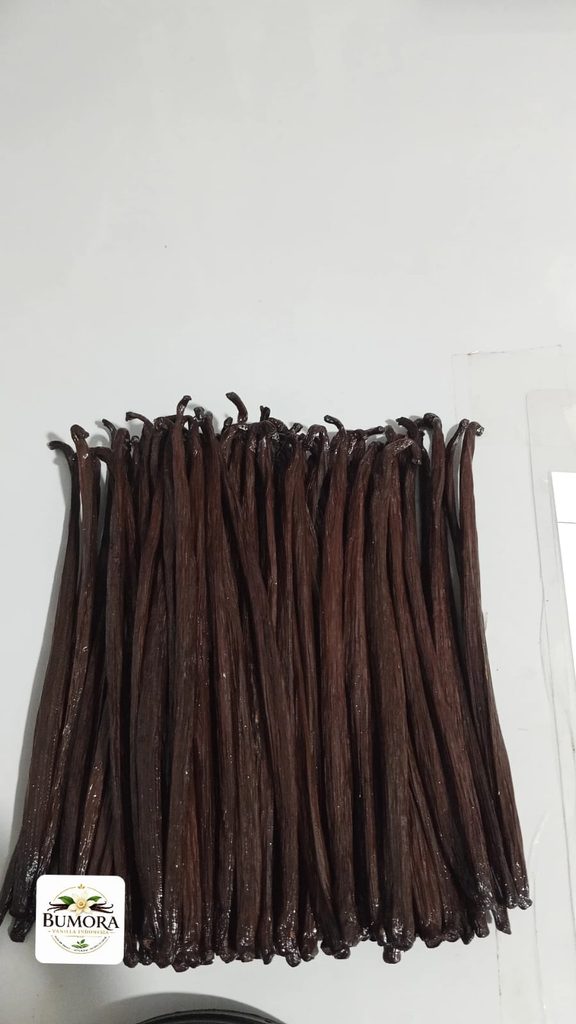
Is Indonesian vanilla better than Madagascar vanilla?
The most accurate answer is that neither origin is universally better.
Indonesian and Madagascar vanilla can both be excellent choices for professional food production. The more important question is which origin, variety, specification, and supplier best match your product requirements.
For procurement teams, pastry businesses, bakeries, gelato manufacturers, chocolate producers, extract manufacturers, and ingredient companies, the comparison should go beyond country of origin.
A proper evaluation should consider:
• Vanilla species and variety
• Aroma and flavor profile
• Moisture content
• Bean length and physical condition
• Curing quality
• Batch consistency
• Traceability
• Documentation
• Supply capability
• Sample performance in the final application
This guide explains the practical differences between Indonesian vanilla and Madagascar vanilla from a B2B sourcing perspective.
Indonesian Vanilla vs Madagascar Vanilla at a Glance
| Factor | Indonesian Vanilla | Madagascar Vanilla |
|---|---|---|
| Main commercial species | Vanilla planifolia is widely cultivated in Indonesia | Vanilla planifolia is the dominant commercial species |
| Other varieties | Indonesian production can also include Tahitensis | Madagascar is predominantly associated with Planifolia |
| Typical market positioning | Premium and commercial food ingredient | Globally established premium vanilla origin |
| Flavor profile | Can show rich, woody, smoky, earthy, or complex notes depending on origin and curing | Commonly associated with sweet, creamy, classic vanilla characteristics |
| Common applications | Bakery, pastry, chocolate, ice cream, gelato, extracts and food manufacturing | Bakery, pastry, ice cream, chocolate, extracts and food manufacturing |
| Key sourcing consideration | Supplier and batch consistency are particularly important | Supplier, crop conditions and batch consistency remain important |
| Sample evaluation | Recommended | Recommended |
| Best purchasing approach | Evaluate actual specification and sample | Evaluate actual specification and sample |
Flavor descriptions are general sensory references rather than fixed specifications. Vanilla is a natural agricultural product and characteristics can vary by genetics, growing conditions, curing and storage. Codex materials likewise recognize variation in vanilla’s odor, flavor and color based on geo climatic conditions.
Why Does Vanilla Origin Matter?
Vanilla is not a standardized manufactured ingredient where every kilogram is chemically identical.
It is an agricultural product whose final characteristics are influenced by several stages of the supply chain.
These include:
• Plant genetics
• Growing environment
• Harvest maturity
• Post harvest handling
• Killing and sweating
• Drying
• Conditioning
• Storage
• Supplier handling
Research on Indonesian vanilla has also highlighted the importance of curing methods and water content in the development and preservation of vanilla quality.
This is why two vanilla beans from the same country can still perform differently.
For a professional buyer, country of origin is the beginning of the evaluation, not the end.
Indonesian Vanilla: What Should Buyers Know?
Indonesia has a long history of vanilla cultivation and supplies vanilla to both domestic and international markets.
Commercial Indonesian vanilla is particularly relevant to B2B buyers looking for:
• Vanilla Planifolia
• Indonesian Tahitensis
• Whole vanilla beans
• Vanilla for extraction
• Vanilla for bakery and pastry
• Vanilla for ice cream and gelato
• Vanilla for chocolate and confectionery
• Other food ingredient applications
Indonesian Planifolia belongs to the same species, Vanilla planifolia, that dominates Madagascar’s commercial vanilla production. Therefore, the difference between Indonesian and Madagascar Planifolia should not be reduced to species alone.
Origin, cultivation environment, curing and handling can all contribute to differences in the finished bean. Research into Indonesian vanilla specifically identifies curing practices and processing consistency as important factors affecting final quality.
Madagascar Vanilla: What Should Buyers Know?
Madagascar is one of the world’s best known vanilla origins and has strong recognition among international food manufacturers and consumers.
Madagascar vanilla is predominantly associated with Vanilla planifolia and is commonly recognized for a classic vanilla sensory profile.
For many buyers, Madagascar offers an established reference point because its vanilla has been used extensively in:
• Premium bakery
• Pastry
• Ice cream
• Chocolate
• Dairy products
• Vanilla extract
• Food flavor applications
However, a country reputation should not replace product evaluation.
A buyer should still verify:
• Actual bean specification
• Aroma
• Moisture
• Physical condition
• Curing quality
• Batch consistency
• Documentation
• Supplier reliability
Indonesian Planifolia vs Madagascar Planifolia
This is a more useful comparison than simply asking whether Indonesia or Madagascar produces better vanilla.
Both can be Vanilla planifolia.
The relevant question becomes:
How does the specific Indonesian Planifolia compare with the specific Madagascar Planifolia being offered?
For procurement teams, compare the actual samples based on:
| Quality Factor | What the Buyer Should Evaluate |
|---|---|
| Aroma | Intensity, cleanliness and overall sensory character |
| Flavor | Sweetness, depth, balance and application suitability |
| Moisture | Supplier specification and consistency |
| Appearance | Color, surface condition and overall bean appearance |
| Flexibility | Physical condition of the cured bean |
| Length | Compliance with the agreed commercial specification |
| Curing | Aroma development and overall bean condition |
| Consistency | Variation within the sample and between batches |
| Documentation | Availability of required export and product documents |
This approach is more reliable than assuming every Indonesian bean or every Madagascar bean has identical characteristics.
Indonesian Vanilla Flavor Profile
Indonesian vanilla is often described with sensory terms such as:
• Rich
• Woody
• Earthy
• Smoky
• Deep
• Complex
These descriptions should be treated as general sensory references, not guarantees for every Indonesian vanilla bean.
The actual sensory profile depends on the specific origin, variety, curing process and storage history.
Research on Indonesian vanilla has associated its aroma with relatively strong vanillin contribution while also noting that other volatile and non volatile compounds contribute to the overall sensory experience.
This distinction matters for professional buyers.
Vanillin percentage is not the same thing as total sensory quality.
A vanilla bean contains many compounds contributing to aroma and flavor.
Madagascar Vanilla Flavor Profile
Madagascar Planifolia is commonly associated with:
• Sweet vanilla character
• Creamy notes
• Rich aroma
• Smooth profile
• Familiar classic vanilla character
Its familiarity makes Madagascar vanilla a natural reference point for many formulations.
However, the final sensory result still depends on the specific beans purchased.
A buyer comparing origins should therefore conduct a sensory evaluation rather than selecting based purely on origin labels.
Does Higher Vanillin Mean Better Vanilla?
Not necessarily.
This is an important point for professional buyers.
Vanillin is a major aroma compound in vanilla, but vanilla quality cannot be accurately judged using vanillin alone.
A proper evaluation should consider:
• Aroma
• Flavor
• Physical condition
• Moisture
• Curing
• Variety
• Intended application
• Batch consistency
Current Codex discussions have specifically raised concerns about using fixed moisture and vanillin values as universal classification criteria because natural vanilla varies between crops, regions and batches.
Therefore, B2B buyers should be careful with suppliers that present a single vanillin number as proof that their vanilla is automatically superior.
Which Origin Is Better for Bakery?
Both Indonesian and Madagascar vanilla can work very well in bakery applications.
The better choice depends on the product.
For example, buyers may evaluate vanilla for:
• Cakes
• Cookies
• Biscuits
• Bread
• Filled pastries
• Creams
• Custards
• Butter based products
For bakery production, the most important question is often not:
Which country produces the best vanilla?
It is:
Which vanilla provides the desired flavor and cost performance consistently in our formulation?
That question can only be answered reliably through product testing.
Which Origin Is Better for Pastry?
Pastry applications often expose vanilla’s aroma more directly than heavily flavored products.
Applications may include:
• Crème based desserts
• Custards
• Mousses
• Cream fillings
• Patisserie
• Viennoiserie
• Premium plated desserts
For these products, sensory evaluation becomes particularly important.
A pastry producer may prefer one origin for its creamy character while another may prefer a more pronounced or complex profile.
There is no universal answer.
Which Origin Is Better for Ice Cream and Gelato?
Ice cream and gelato manufacturers should consider:
• Aroma intensity
• Flavor persistence
• Interaction with dairy
• Performance after freezing
• Desired consumer profile
• Cost per production batch
Vanilla should ideally be tested directly in the finished formulation.
A bean that smells excellent on opening may not necessarily deliver the same result after extraction, blending, freezing or other processing.
For this reason, application testing is more valuable than relying solely on a supplier’s sensory description.
Which Origin Is Better for Vanilla Extract?
Both Indonesian and Madagascar Planifolia can be used for vanilla extraction.
Extract manufacturers should evaluate:
• Bean quality
• Moisture specification
• Aroma profile
• Vanillin and other relevant compounds
• Extraction yield
• Batch consistency
• Long term supply availability
• Cost per finished unit of extract
The correct purchasing decision should therefore be based on the economics and sensory performance of the finished extract, rather than the raw bean price alone.
What About Vanilla for Chocolate?
Chocolate can benefit from vanilla with enough aromatic character to remain noticeable within a complex flavor system.
Indonesian vanilla can be attractive for buyers seeking a deeper and more pronounced sensory profile, while Madagascar vanilla may suit formulations designed around a familiar sweet and creamy vanilla character.
The correct choice should be determined through formulation trials.
For chocolate manufacturers, evaluate the vanilla after it has been incorporated into the actual chocolate recipe.
Moisture Content: What Should B2B Buyers Look For?
Moisture is an important specification for cured vanilla beans.
It influences:
• Bean flexibility
• Physical condition
• Storage behavior
• Weight
• Curing chemistry
• Risk of deterioration when poorly controlled
Research on Indonesian vanilla identifies approximately 25–30% moisture as a commonly desirable range for quality cured beans, while also emphasizing that moisture must be considered alongside other quality parameters.
However, buyers should not automatically assume that a lower moisture percentage means better vanilla.
The correct specification should be agreed between buyer and supplier based on:
• Product type
• Grade
• Intended application
• Storage conditions
• Import requirements
• Commercial specification
How Should Buyers Evaluate Vanilla Bean Quality?
Before placing a commercial order, a professional buyer should evaluate both documentation and physical samples.
Physical Evaluation
Check:
• Bean appearance
• Color
• Flexibility
• Surface condition
• Length
• Aroma
• Signs of mold or deterioration
Technical Evaluation
Where applicable, request:
• Moisture specification
• Product grade
• Variety or species information
• Batch identification
• Relevant laboratory documentation
Supply Chain Evaluation
Also consider:
• Origin information
• Traceability
• Curing process
• Packaging
• MOQ
• Lead time
• Export documentation
• Phytosanitary requirements
• Supplier communication
• Capacity for repeat orders
This is the difference between buying vanilla as a commodity and establishing a reliable ingredient supply relationship.
Why Sample Evaluation Matters
A sample is one of the most important tools available to a B2B buyer.
A supplier’s specification sheet tells you what the product is supposed to be.
A sample tells you how the product actually performs.
Before committing to a larger order, buyers should evaluate:
• Aroma
• Appearance
• Moisture
• Flexibility
• Flavor
• Extraction performance where applicable
• Performance in the finished product
For manufacturers, the final test should ideally take place in the actual formulation.
Should You Choose Indonesian Vanilla vs Madagascar Vanilla?
Use this decision framework.
| Your Priority | Potentially Suitable Choice |
|---|---|
| Classic, familiar vanilla profile | Madagascar Planifolia may be a strong candidate |
| Richer or more pronounced sensory character | Indonesian Planifolia may be worth evaluating |
| Direct sourcing from Indonesia | Indonesian vanilla |
| Established global origin recognition | Madagascar vanilla |
| Bakery and pastry | Both should be evaluated |
| Ice cream and gelato | Both should be evaluated in the actual formulation |
| Vanilla extract | Both can be suitable depending on specification and economics |
| Long term B2B supply | Compare supplier capability rather than origin alone |
The important word in this table is evaluate.
There is no responsible reason to tell every buyer that one origin is automatically superior.
What Should Procurement Teams Ask a Vanilla Supplier?
Before placing an order, ask the supplier:
• What species and variety is the vanilla?
• What is the agreed moisture specification?
• What is the typical bean length?
• How is the vanilla cured?
• Where is the vanilla sourced?
• Can the supplier provide batch information?
• What quality control is performed?
• What export documents are available?
• Is a phytosanitary certificate available when required?
• What is the MOQ?
• What packaging is used?
• What is the expected lead time?
• Can a physical sample be evaluated first?
• Can the supplier support repeat commercial orders?
These questions help procurement teams compare suppliers on more than price.
Why Consider an Indonesian Vanilla Supplier?
For international buyers, Indonesia can be an attractive sourcing origin because it offers commercially relevant vanilla production and multiple potential sourcing regions.
Working directly with an Indonesian supplier can also provide opportunities to discuss:
• Product specifications
• Farmer sourcing
• Curing practices
• Batch requirements
• Packaging
• Export documentation
• Sample evaluation
• Long term supply arrangements
For buyers interested in Indonesian vanilla, BUMORA VANILLA focuses on supplying Indonesian vanilla products to international B2B customers.
Our approach is based on sourcing, curing, sorting, quality control, traceability and export preparation.
For a deeper overview of our sourcing approach, see our vanilla supply process.
For buyers who are still evaluating Indonesian vanilla as a potential origin, our Indonesian vanilla beans supplier guide provides a broader overview of B2B sourcing considerations.
BUMORA VANILLA: Indonesian Vanilla for B2B Buyers
BUMORA VANILLA supplies Indonesian vanilla for professional food applications.
Our product range includes:
• Indonesian Planifolia
• Indonesian Tahitensis
• Vanilla powder
• Vanilla paste
• Vanilla extract
For international buyers, product suitability should always be evaluated according to the intended application and agreed specification.
If you are comparing Indonesian vanilla with Madagascar vanilla for a commercial project, we recommend starting with the product specification and sample evaluation.
You can contact BUMORA VANILLA to discuss your requirements, destination country, quantity and preferred specification.
Final Verdict: Indonesian Vanilla vs Madagascar Vanilla?
There is no single winner.
Madagascar vanilla has a strong global reputation and is widely recognized for its classic Planifolia profile.
Indonesian vanilla offers its own distinctive sensory characteristics and can be a strong alternative or complementary origin for professional food businesses.
For B2B buyers, the best purchasing decision should be based on:
• Actual sample quality
• Sensory performance
• Product specification
• Curing quality
• Moisture
• Batch consistency
• Traceability
• Documentation
• Supply reliability
• Total cost in the finished application
The smartest approach is not to ask:
“Which country has the best vanilla?”
Instead, ask:
“Which vanilla specification and supplier consistently deliver the result our product requires?”
That is the question that leads to a better long term sourcing decision.
Frequently Asked Questions
Is Indonesian vanilla better than Madagascar vanilla?
Neither origin is universally better. Both can produce high quality vanilla. The appropriate choice depends on the variety, specification, sensory profile, application and supplier.
Is Indonesian vanilla the same species as Madagascar vanilla?
Indonesian Planifolia and Madagascar vanilla are both commonly Vanilla planifolia. Differences in growing environment, curing and handling can still contribute to different sensory characteristics.
Which vanilla has a stronger flavor?
Flavor intensity varies by variety, origin, curing and batch. Indonesian Planifolia is often described as more pronounced or woody, while Madagascar Planifolia is commonly associated with a classic sweet and creamy profile. Actual samples should be evaluated before making a commercial decision.
Is Indonesian vanilla suitable for food manufacturing?
Yes. Indonesian vanilla is used across bakery, pastry, ice cream, gelato, chocolate, extract and other food applications.
Is Madagascar vanilla better for premium products?
Not automatically. Premium positioning depends on the quality and specification of the actual beans, as well as the application and market positioning of the finished product.
Does higher vanillin mean higher quality vanilla?
Not necessarily. Vanillin is an important aroma compound, but overall vanilla quality also depends on aroma, flavor, curing, physical condition, moisture, variety and batch consistency.
What moisture content should vanilla beans have?
The appropriate moisture specification depends on the product and commercial requirements. Research on Indonesian cured vanilla commonly discusses approximately 25–30%, but moisture should not be used alone to determine quality.
Should I request samples before buying wholesale vanilla beans?
Yes. Sample evaluation is strongly recommended for professional buyers, especially when the vanilla will be used in a commercial formulation.
Can Indonesian vanilla replace Madagascar vanilla?
In some applications, yes. However, the two origins can have different sensory characteristics. The best approach is to conduct a formulation trial before making a substitution decision.
How can I buy Indonesian vanilla beans wholesale?
Contact an Indonesian vanilla supplier with your required quantity, variety, specification, destination country and application. Request a product specification and sample before committing to a larger commercial order.